
What is AI actually being used for?
Key takeaways
- AIUseCaseHub brings together 3,000+ source-linked AI implementations from companies worldwide, so you can find real projects instead of demos and predictions.
- You can search and compare cases by industry, business function, technology, cloud platform, market, impact, and implementation effort.
- Registration and use are free; logged-in users can save favourites, set company and industry alerts, and build a personal AI use-case portfolio.
- A personal impact-effort matrix lets you position selected use cases by expected business impact versus implementation effort to prioritise opportunities.
- AI agents run continuously to discover, structure, classify, and review new cases, keeping the dataset growing.
Since LLMs and agents took the stage, I have not published much on Relataly. Not because machine learning suddenly matters less. Quite the opposite. The field has expanded, and there have been many new paths to explore. One of those paths became AIUseCaseHub. The project started with a question I kept encountering in conversations with customers and partners: What are companies actually using AI for?
There was no shortage of announcements, demos, and predictions. But finding real implementations, understanding the technologies behind them, and comparing the resulting business impact remained surprisingly difficult. The real challenge is that the information is scattered across various sites from hyperscalers, over their customers and news sites to various consulting firms.
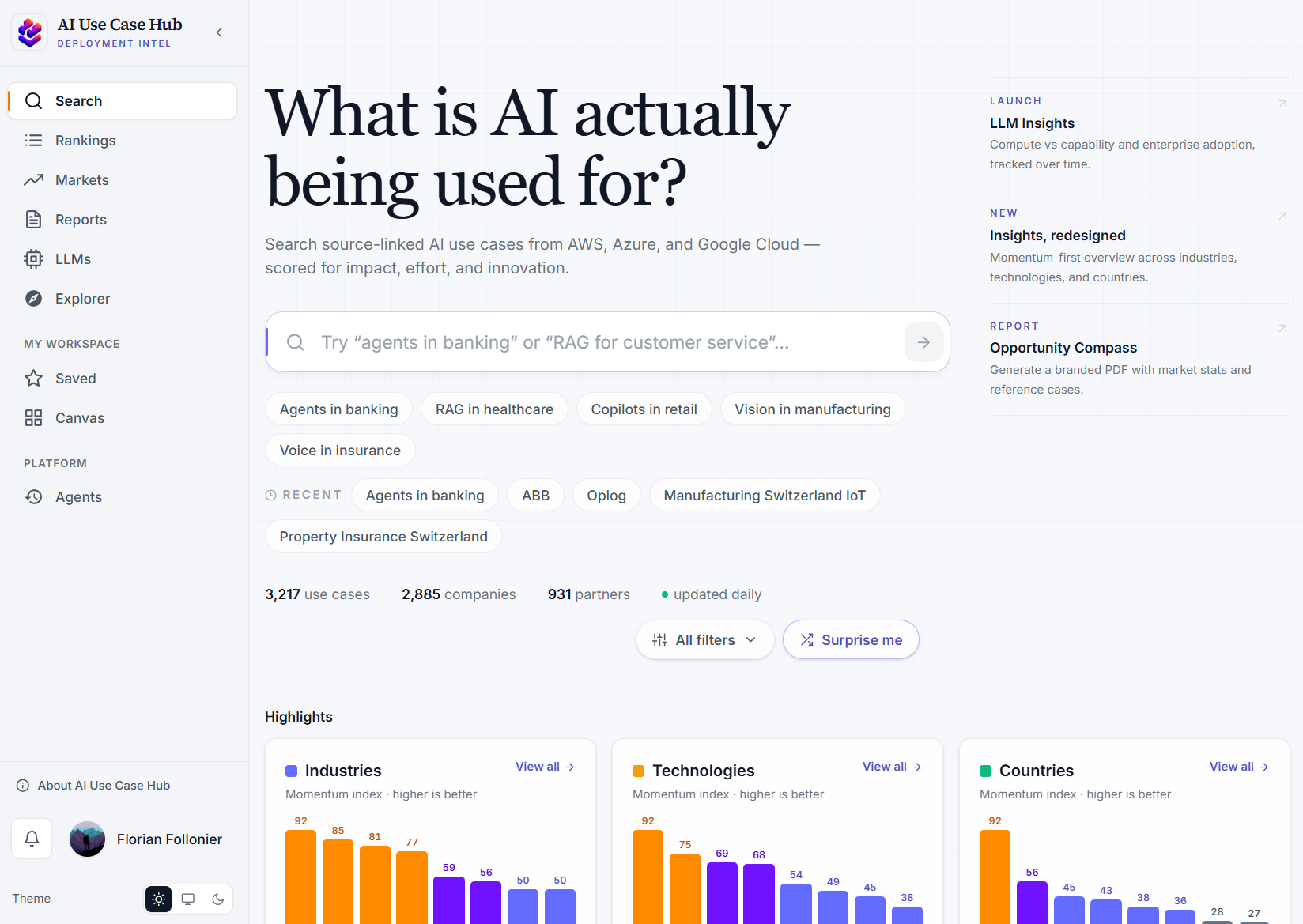
AI Use Case Hub now brings together more than 3,000 source-linked AI implementations from companies around the world. You can search and compare them by industry, business function, technology, cloud platform, market, impact, and implementation effort.
Behind the scenes, AI agents continuously discover, structure, classify, and review new cases. The growing dataset also makes it possible to move beyond individual success stories and explore broader questions: Which use cases are gaining momentum? Where are agents already being deployed? Which applications appear to have the greatest impact in manufacturing, healthcare, finance, or retail?
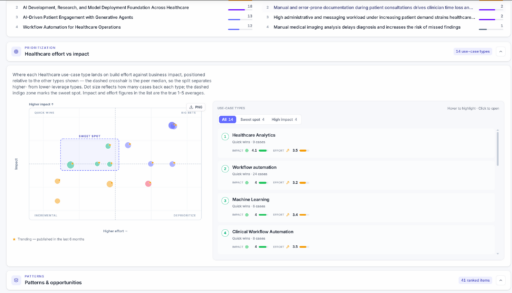
www.aiusecasehub.com features aggregated market insights and useful impact effort overviews for specific industries and application domains.
More than a use case database
Registration and use of the platform are free. Logged-in users can save and manage their favorite use cases, set alerts for companies and industries, and build their own AI use case portfolio.
One feature I find particularly useful is the personal impact-effort matrix. Users can select ideas from the database, use them as inspiration, add them to their own workspace, and position them according to expected business impact and implementation effort. This turns the platform from a source of examples into a practical tool for prioritizing AI opportunities.
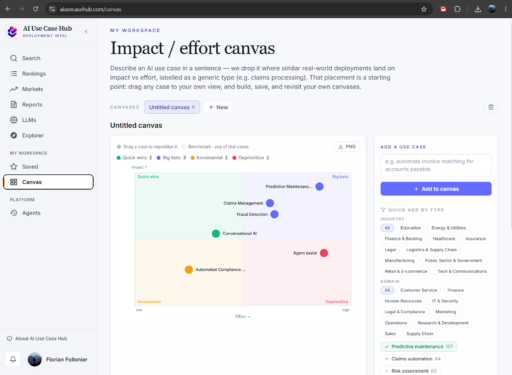
Logged-in users can create their own ai use case impact effort matrix drawing from inspiration from the use case database
In many ways, the project reflects what I have been exploring since my last articles here: not only how individual machine-learning models work, but how AI systems, agents, data, and automation can work together to create something useful.
Frequently asked questions
- What is AIUseCaseHub?
- AIUseCaseHub (aiusecasehub.com) is a free platform that brings together more than 3,000 source-linked, real-world AI implementations from companies around the world, searchable by industry, business function, technology, cloud platform, market, impact, and implementation effort.
- Is AIUseCaseHub free to use?
- Yes. Registration and use of the platform are free. Logged-in users can additionally save and manage favourite use cases, set alerts for companies and industries, and build their own use-case portfolio.
- How are the use cases collected and kept up to date?
- AI agents work continuously in the background to discover, structure, classify, and review new cases from across the web, so the dataset keeps growing rather than being maintained by hand.
- How can AIUseCaseHub help prioritise AI ideas?
- The personal impact-effort matrix lets you select ideas from the database, add them to your own workspace, and position them by expected business impact and implementation effort — turning a catalogue of examples into a prioritisation tool.